Introduction
Today was a different day—a Day X. With a special schedule to kick off this year’s Belonging Week at WAB, we started the day with collaborative activities between grades throughout the MYP. Specifically, ProFarmer participated in two of these collaborative activities with our community partners: the SG1/G6 Sustainable Farming activity with Ms. Bita and her son Bayan Changizi, from the FROOT Farm, and the G3/G8 Chinese Bee Cooperative activity with Ms. Ivy (or Ms. Zhao), from the Boyuling cooperative. Additionally, today marked the our first interview for the 2025-2026 documentary, which will be centered around the conservation of Chinese Honeybees.
SG1/G6 Sustainable Farming Activity
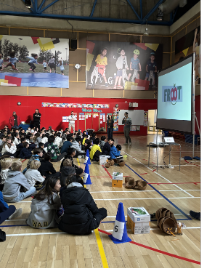
In this activity, Bayan and Ms. Bita came to the ES Gym to present to the SG1s and G6s. Starting off with their background, they talked about their beginnings, renting a piece of land in rural Beijing and turning it into a small farming project back during COVID, when Bayan was still in 10th grade. They explained how they planted the vegetables they planted (e.g. lettuce), built two greenhouses, and even worked on chicken incubation. Subsequently, we did a fun activity to learn about growing plants. All the students were given a fake coconut, which was filled with soil and seeds, and they were then tasked with mixing everything inside of the coconut to prepare it for the plant to grow. After everyone was done, the teachers collected the coconuts from the students to help take care of the plants.
Throughout this activity, I learned all about FROOT, and the pure dedication needed to tend to a piece of land and to grow healthy plants. It also showed me how an originally small, simple school project could become something significant and bloom if you stick with it.
G3/G8 Chinese Bee Cooperative Activity
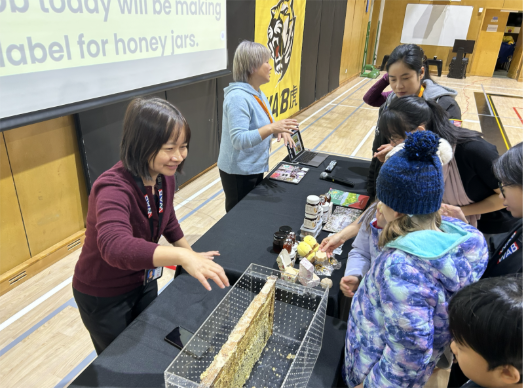
For this activity, Ms. Zhao, the representative of the Boyuling Chinese Beekeeping Cooperative (a cooperation that focuses on breeding and protecting native Chinese honey bees), visited WAB.
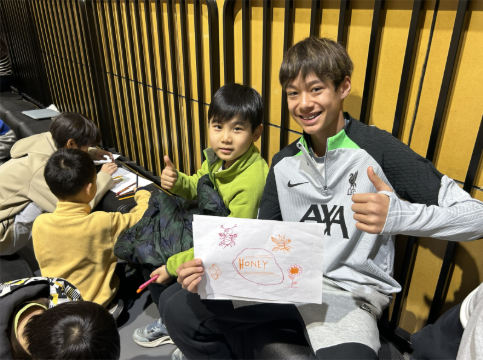
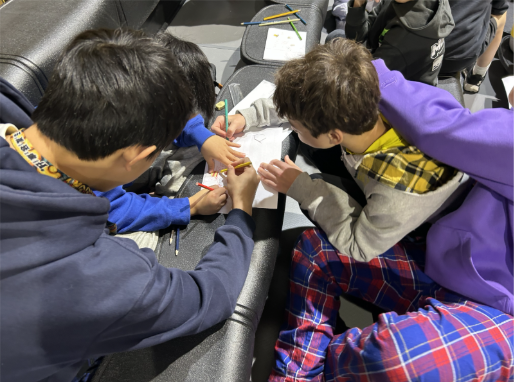
To start off, she presented to the students some information about the cooperative, including what they do, and why they do it. After the introduction and a short 5-minute video, she let the students ask some questions. And at the end, all the students were given papers to try and design their very own logo for the honey jars with their buddies.
So why did Ms. Zhao come to WAB to present, and why do they focus on protecting and breeding Chinese honeybees?
Because Chinese honey bees, or Apis cerana, are a nationally protected species, with dwindling populations. They play a crucial role in pollination and forest ecosystem health, but faces threats from habitat loss, competition with invasive species, and pesticide use.
In the presentation that Ms. Zhao presented, she presented some data and fun facts about bees and the Boyuling cooperative. For example:
- With the help of bees, forest coverage has increased from 70% to over 90% in the last 10 years, drastically benefiting the ecosystem.
- A bee has to fly around 100 thousand kilometers, or spin around the Earth almost 2.5 times, just to create 0.5kg of honey. Talk about a hard worker!
- A bee visits around 5000 flowers every day, only sleeping a few times a day, for around 15 seconds per time.
- Albert Einstein never really said, “If the bee disappeared off the face of the Earth, man would only have four years of life left.” However, this quote still stands to show the utter importance of the role of bees in the environment.
The biggest thing I got out of this experience was that bees are extremely important. Not only for us, but also for the rest of the world! They work extremely hard every day to make the world a better place, and I was just as surprised when I heard Ms. Zhao say just how hard they work every day. Can you believe it?
“总而言之,蜜蜂在世上无处不在,世界上每个角落,都有着蜜蜂忙碌的身影。 “
Interview with Ms. Zhao
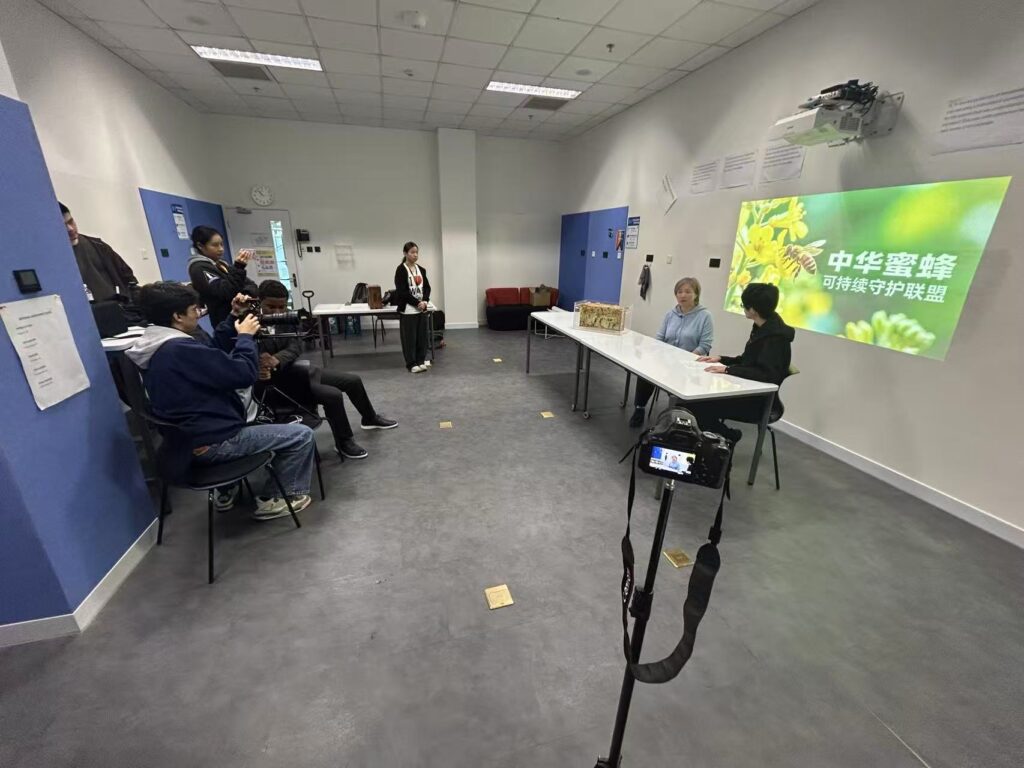
Afterwards, Ms. Zhao joined us for an interview for our club documentary, representing the Chinese honeybee cooperative. With the help of our team of interviewers and logistics members, we created an interesting and productive conversation that helped not only with our documentary, but also with our members’ knowledge on the cooperative. Our members showed up at 10:20AM for the interview, each responsible for setting up a component of the set—whether that be video recording equipment, microphones, or the projected background image.
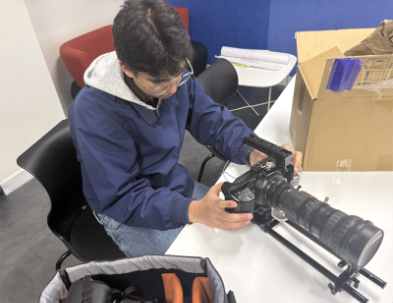
Before all this, though, there was a pickle that no one expected. During the Bee Cooperative Activity, we realized that one of our cameras was missing its SD card, while the other camera’s SD card was running out of space. This posed a huge issue for us, as our better camera—the one without the SD card—was the main camera we were planning to use, but the other camera’s SD card also didn’t quite have the right level of performance for the better camera. Just in time though, we managed to borrow a new SD card from one of the film teachers, Mr. Izing, saving the interview.
Each member pitched in effectively, utilizing their own unique skills in order for a smooth session: Simon, who managed the main camera; Zaka and Hans, who set up and managed the audio recording equipment; Ernest, who set up and managed the second camera; and Peter, who was the one to go on camera and interview Ms. Zhao.
Our goal with the making of this documentary is to spread awareness not only about Chinese Honeybees, but about the conservation of all the precious animal species on this planet. Whether that be some insect species you’ve never heard of, a marine species that you may never see in your life, or some herb in a tropical rainforest, all the environments and ecosystems on this planet came to be due to the contributions of each and every animal that exists, and has existed. And in the same way, these environments and ecosystems also rely on the continuation of each species they consist of. Of course, there are few that are unfamiliar with this idea, but also some who never really truly understand the actual magnitude of importance of a single species. This has nothing to do with intelligence; rather, it’s likely that perhaps some may not have been provided with or seen enough real examples to truly understand—and that’s what this documentary aims to build on.
…
It’s hard to believe how much happened within the span of just half a day, and yet, things went as well as we could ever hope for things to go. Although there was a bump here or there (some that shouldn’t have happened, but nonetheless), this day marked a great day for our club and community, and all turned out well in the end. So many valuable lessons and fun facts were learned, not only by the students attending the activities, but also by us as members of the Profarmer club. That’s what makes it truly special—if you’re open enough, then it’s a learning experience for everyone.